
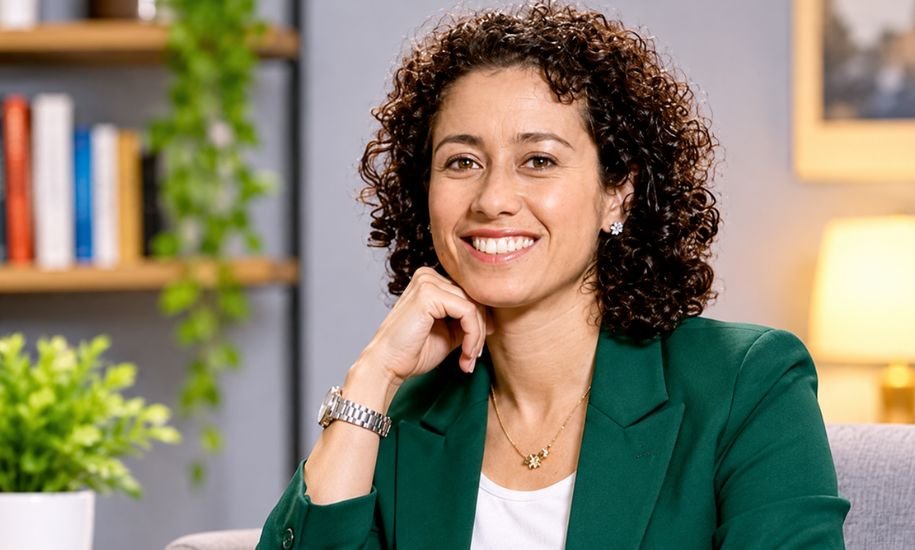
Samira Ahmed is a British journalist, broadcaster and writer known for presenting BBC Radio 4’s Front Row and the BBC television programme Newswatch. Her career spans more than three decades, including international reporting, investigative journalism, documentary-making and cultural broadcasting. She has worked for the BBC, Channel 4 News and Deutsche Welle, covering subjects ranging from international affairs and religious extremism to film, music and social history.
Her professional achievements include a landmark equal-pay employment tribunal against the BBC in 2020, an award-winning investigation into violence against lesbian women in South Africa and the three-part documentary series Art of Persia. She has also explored British film history in her 2026 BFI Film Classics book, A Hard Day’s Night.
Quick Biography
| Detail | Information |
|---|---|
| Full name | Samira Ahmed |
| Profession | Journalist, broadcaster, documentary-maker and writer |
| Nationality | British |
| Background | British Indian and Pakistani family heritage |
| Birthplace | Exact birthplace not independently verified |
| Date of birth | Not confirmed by a reliable primary source |
| Education | Wimbledon High School, St Edmund Hall, University of Oxford and City University |
| Subject studied | English |
| Professional qualification | Postgraduate diploma in newspaper journalism |
| Career began | BBC graduate news trainee in the early 1990s |
| Known for | BBC’s Front Row and Newswatch |
| Previous employer | Channel 4 News, 2000–2011 |
| Current broadcasting work | Front Row and Newswatch |
| Book | A Hard Day’s Night (2026) |
| Professional recognition | Broadcasting Press Guild Audio Broadcaster of the Year, 2020 |
| Other appointment | President of the Twentieth Century Society since July 2025 |
Who Is Samira Ahmed?
Samira Ahmed has developed a career across television, radio, print journalism and documentary production. She is particularly recognised for her ability to connect news and current affairs with cultural and historical subjects.
Her broadcasting career began at the BBC, where she worked as a radio reporter, news presenter and correspondent before moving into international reporting. She subsequently spent eleven years at Channel 4 News, working as a reporter and presenter and contributing to documentaries on important social issues.
She returned to prominent BBC presenting work in the 2010s. Alongside her regular broadcasting responsibilities, she has developed projects exploring British popular culture, religious history, architecture, music and social change.
Her professional identity therefore extends beyond that of a television news presenter. Her work also includes investigative reporting, long-form interviews, cultural documentaries and published writing.
Early Life and Family Background
Ahmed grew up in south London, with family connections to both India and Pakistan. Her mother, Lalita Ahmed, came from Lucknow in northern India, while her father, Athar Ahmed, came from Karachi, Pakistan.
Her father ran a business supplying catering equipment and products to restaurants. Her mother worked in broadcasting and television, including presenting programmes for the BBC’s Asian and Hindustani services.
Lalita Ahmed’s television work included Gharbar, a programme recorded at the BBC’s Pebble Mill studios in Birmingham. It discussed subjects affecting British Asian women, including cooking, family life and domestic violence.
One childhood experience proved particularly significant to Samira’s future ambitions. At around nine years old, she visited Pebble Mill to watch her mother working in a television studio. She was struck by the professionalism of the production team and the opportunity for people from different backgrounds to work together.
In a later interview, she recalled that the experience helped her understand that the BBC could also be a place where someone like her could build a career.
Ahmed has also spoken about her childhood in a multicultural household. Her mother was Hindu and her father was Muslim. In a 2020 interview with The Guardian, she explained that she was brought up to respect different religions and traditions.
She has described learning to read the Qur’an with an Arabic tutor, visiting Hindu temples with her mother and attending Catholic religious classes at school. These experiences formed part of her mixed religious and cultural upbringing, although they should not be taken as confirmation of her present personal religious beliefs.
Education and Qualifications
Ahmed attended several schools during her childhood before joining Wimbledon High School in south-west London at the age of eight. She remained there until she was 18.
Her educational background included earlier attendance at Virgo Fidelis, a convent school in Upper Norwood, and Holy Cross Convent Prep School in New Malden.
After completing her A-levels, she studied English at St Edmund Hall, University of Oxford. During her university years, she became involved in student journalism and edited the student publications Isis and Union. She also won the Philip Geddes Journalism Prize for her journalism.
Following Oxford, she studied newspaper journalism at City University in London, completing a postgraduate diploma.
She also received a Guardian bursary during her journalism training, which helped her gain practical newspaper experience.
Her education gave her a foundation in literature, research and journalism before she entered professional broadcasting.
How Samira Ahmed Started Her Journalism Career
Ahmed’s interest in television journalism began before she entered university.
When she was around eight years old, she sent material to the BBC children’s news programme Newsround about a racist incident at her school. The programme featured her contribution, and she later recalled receiving a Newshound badge from presenter John Craven.
She initially considered print journalism, but the experience of seeing her work broadcast helped develop her interest in television.
After studying journalism in London, she joined the BBC graduate news trainee scheme in the early 1990s. Her training involved attachments across different BBC departments, allowing her to develop experience in radio and television reporting.
Her first professional reporting position was as a network radio reporter. She subsequently obtained presenting opportunities with BBC World, where she read international news to audiences around the world.
Early BBC Career and International Reporting
During the 1990s, Ahmed worked across several BBC news programmes and reporting roles.
She became a reporter on Radio 4’s Today programme before moving to Newsnight. Her work included investigating a major charity fraud and examining the growing influence of radical Islamist groups on British university campuses.
She later worked as a BBC News correspondent and covered significant domestic and international stories.
One of her important overseas assignments was serving as the BBC’s Los Angeles correspondent during the 1990s. In this role, she reported on the O.J. Simpson civil trial, one of the most widely followed legal cases of the decade.
Her reporting from the United States also covered the 1996 presidential election and other political and social issues.
Ahmed subsequently worked as a news presenter for Deutsche Welle TV in Berlin. She also spent time working across international BBC news services.
These experiences gave her a broad understanding of international reporting before her move to Channel 4.
Career at Channel 4 News
In 2000, Ahmed joined Channel 4 News, where she worked for approximately eleven years, leaving in 2011.
She worked as both a reporter and presenter, developing a reputation for covering subjects that required more detailed investigation than a conventional news bulletin.
One of her significant projects was Islam Unveiled, a two-part Channel 4 documentary series. The production involved three months of travel and filming across countries including Iran and Malaysia.
Another important achievement was her investigative report examining so-called corrective rape against lesbian women in South Africa.
The subject attracted attention because it exposed serious violence and discrimination that received relatively limited coverage in mainstream reporting at the time. Her work earned the Stonewall Broadcast of the Year award in 2009.
Her Channel 4 years were an important period in her development as a journalist, allowing her to combine breaking-news reporting with international investigations and documentary storytelling.
Return to the BBC: Newswatch and Front Row
Following her departure from Channel 4, Ahmed returned to prominent BBC presenting work.
She presented Sunday Morning Live, a BBC One discussion programme examining ethical, social and religious issues, during 2012 and 2013.
She also became presenter of Newswatch, the BBC’s programme examining viewers’ responses and complaints about news coverage. The employment tribunal judgment records that she began presenting the programme on 1 October 2012.
In 2014, she joined BBC Radio 4’s Front Row, the broadcaster’s flagship arts and culture programme.
These two programmes became particularly important parts of her professional identity.
Through Newswatch, Ahmed gives audiences an opportunity to question and scrutinise BBC journalism. Through Front Row, she interviews people from the worlds of film, literature, music, theatre and television.
She has also presented a range of other BBC programmes, including The World Tonight, PM, Night Waves and The Proms on BBC Four. Her broadcasting work has included BBC Radio 3, Radio 4 and the World Service.
Documentaries and Major Reporting Projects
Documentary-making is an important part of Ahmed’s career. Rather than limiting her work to studio presentation, she has developed programmes investigating culture, politics, history and social issues.
Art of Persia
One of her best-known documentary projects is Art of Persia, a three-part BBC Four series broadcast in 2020.
The programme follows Ahmed on a journey through Iran, exploring the country’s history, ancient Persian civilisation, language, architecture and cultural heritage.
It was particularly notable because it was one of the first major Western documentary series filmed in Iran in approximately four decades.
The production offered viewers a perspective on the country’s history and society beyond the limited political coverage commonly associated with Iran in Western news reporting.
The series was shortlisted for the 2021 Broadcast Digital Awards in the Documentary Programme of the Year category.
Disgusted, Mary Whitehouse
In March 2022, Ahmed presented Disgusted, Mary Whitehouse for BBC Radio 4’s Archive on 4.
The programme investigated the life and campaigning activities of Mary Whitehouse, the prominent campaigner associated with efforts to influence standards in British television and public morality.
Ahmed examined Whitehouse’s diaries and explored her place in British cultural and broadcasting history.
I Dressed Ziggy Stardust
Her radio documentary I Dressed Ziggy Stardust explored the relationship between David Bowie, his Ziggy Stardust persona and British Asian teenage girls during the 1970s.
The programme reflects Ahmed’s wider interest in how popular culture influences identity and social attitudes.
Other documentary work
Her other projects include:
- The Fundamentalist Queen, exploring Elizabeth Cromwell, wife of Oliver Cromwell.
- The Victorian Queens of Ancient Egypt, for BBC Radio 3.
- Race and Our Public Space, for BBC Radio 4.
- Generation Change, examining campaigners addressing violence against women, poverty and racism.
- Laura Ingalls’ America, exploring the historical and cultural legacy of the American writer.
- In the Studio with Daniel Libeskind, a BBC World Service programme about the architect.
She has also produced programmes about science, literature, architecture and the history of broadcasting.
Samira Ahmed’s Work on the Beatles
In April 2023, Ahmed helped bring an important piece of British music history to a wider audience.
While preparing a programme connected to Stowe School, she noticed a commemorative plaque on the school’s theatre building. This led to an investigation into an early Beatles performance recorded there in April 1963.
The recording, made by school pupil John Bloomfield, was identified as the earliest complete recording of a Beatles concert in Britain.
The discovery was featured on BBC Radio 4’s Front Row, almost 60 years after the concert took place.
The project demonstrated how her interest in cultural history could lead to original research and the rediscovery of material with wider historical importance.
It also provided a natural connection to her later writing about the Beatles’ first film.
Samira Ahmed’s Book: A Hard Day’s Night
In 2026, Ahmed published A Hard Day’s Night, a volume in the British Film Institute’s BFI Film Classics series.
Published by Bloomsbury under the British Film Institute imprint, the book examines the Beatles’ 1964 film of the same name.
The paperback edition was published on 11 June 2026, following the earlier digital editions.
The book explores the film’s production, its relationship with television and popular music, its cultural impact and its lasting importance in British cinema.
Ahmed also examines the film’s treatment of women, its class and sexual politics, and the social changes reflected in its depiction of the Beatles and their celebrity.
Her background as a cultural journalist and television presenter provides an additional perspective on the relationship between the film industry and popular entertainment.
The publication adds a significant book-writing achievement to a career previously associated primarily with journalism, broadcasting and documentary production.
BBC Equal-Pay Tribunal Case
One of the most significant public events in Ahmed’s professional life was her equal-pay case against the BBC.
The dispute concerned her presenting fee for Newswatch compared with the amount paid to Jeremy Vine for presenting Points of View.
Ahmed argued that the two programmes involved broadly similar work and that the difference in their remuneration could not be satisfactorily justified.
The official employment tribunal judgment, dated 10 January 2020, found unanimously in her favour.
The judgment concluded that her presenting work on Newswatch was like Jeremy Vine’s work on Points of View for the purposes of the Equality Act 2010. It also found that the BBC had not established a material factor explaining the difference in pay that did not involve sex discrimination.
The tribunal’s findings covered her Newswatch contracts from October 2012 to September 2018.
The judgment recorded that her initial fee was £440 per programme in 2012, increasing to £465 in 2015. Jeremy Vine was paid £3,000 per episode for Points of View during the relevant comparison period.
After the tribunal decision, the BBC reached a settlement with Ahmed. The settlement amount was not publicly disclosed in the judgment.
The case became an important example in discussions about equal pay, transparency and the treatment of women working in broadcasting.
Awards and Professional Recognition
Ahmed has received several awards and professional distinctions during her career.
Stonewall Broadcast of the Year, 2009: She received the award for her Channel 4 News investigation into so-called corrective rape against lesbian women in South Africa.
Sandford St Martin Awards, 2017: She was runner-up in the Interview of the Year category for her World Service interview with Terry Waite.
Broadcasting Press Guild Audio Broadcaster of the Year, 2020: The award recognised her work on Front Row and the podcast series How I Found My Voice.
Her documentary Art of Persia was also shortlisted for Documentary Programme of the Year at the 2021 Broadcast Digital Awards.
She has won Celebrity Mastermind and subsequently appeared in a champions’ special.
In addition, she has received honorary doctorates from City, University of London, the University of East Anglia, Kingston University and the University of Winchester. She is also an Honorary Fellow of St Edmund Hall, Oxford.
Other Professional and Institutional Roles
Ahmed’s work extends beyond broadcasting.
In July 2025, she was elected President of the Twentieth Century Society, an organisation campaigning to protect important modern buildings and design heritage.
She is also a member of Historic England’s National Blue Plaques Panel, which reviews candidates for the national blue plaque scheme.
Her other publicly documented roles include serving as a trustee of the Centre for Women’s Justice and as an ambassador for the Theatres Trust. She has also served on the editorial review board of Doctor Who Magazine.
She previously held a Visiting Professorship at Kingston University, where she taught and lectured on journalism and media.
Her involvement in heritage and cultural organisations reflects the same interests found in her documentaries: the relationship between history, media, architecture and social change.
Samira Ahmed’s Husband and Children
Ahmed has generally kept details of her personal life away from the centre of her public profile.
An interview profile published by Essentials Surrey reports that she met Brian Millar while studying at Oxford and identifies him as her husband.
A separate 2020 profile in The Guardian also referred to her husband and reported that they were living with their two children during the COVID-19 lockdown.
The Guardian described the children as being aged 18 and 20 at that time. There is no need to repeat their names or other private details, which have not been established as relevant to her professional biography.
Her public interviews provide some information about her family, but she does not routinely discuss her relationships in her broadcasting work.
Religion and Cultural Background
Samira Ahmed grew up in a family with different religious traditions.
Her mother was Hindu and her father was Muslim. In her 2020 Guardian interview, Ahmed described being brought up to respect all religions and none.
She has discussed her experiences of learning about Islam, Hinduism and Christianity during childhood.
Her mixed cultural background has also informed her reporting on religion and society. However, her parents’ religious identities should not be used to assign a personal religious label to Ahmed. She has not provided sufficient verified public information to establish a current personal religious affiliation.
Current Work and Recent Developments
As of November 2026, Ahmed continues to identify Newswatch on BBC One and the BBC News Channel and Front Row on BBC Radio 4 among her broadcasting roles.
Her personal website lists further radio broadcasts, cultural events and appearances during November 2026.
The publication of A Hard Day’s Night has also expanded her work as an author, while her presidency of the Twentieth Century Society adds a formal heritage role to her professional activities.
Her current projects demonstrate that she remains involved in journalism, broadcasting, cultural writing and public discussion rather than concentrating on a single television programme.
Conclusion
Samira Ahmed’s career reflects more than three decades of work across British and international journalism. From her early BBC training and international reporting to her years at Channel 4 News, she has developed a professional portfolio that includes investigation, news presentation, radio broadcasting and documentary production.
Her equal-pay tribunal victory became one of the most significant public moments of her career, while programmes such as Art of Persia and Front Row demonstrate her interest in connecting culture with wider social and historical questions.
With her 2026 book on A Hard Day’s Night and her role as President of the Twentieth Century Society, Ahmed has continued to develop her work beyond conventional news presenting. She remains a notable figure in British broadcasting and cultural journalism.
Frequently Asked Questions
1. Who is Samira Ahmed?
Samira Ahmed is a British journalist, BBC presenter, documentary-maker and writer. She is particularly known for presenting Front Row on BBC Radio 4 and Newswatch on BBC television.
2. How old is Samira Ahmed?
A Guardian interview published in June 2020 described Ahmed as 51. However, an exact date of birth has not been independently established through the primary sources used for this profile, so a precise current age cannot be stated confidently.
3. Where did Samira Ahmed study?
She attended Wimbledon High School, studied English at St Edmund Hall, University of Oxford, and completed a postgraduate diploma in newspaper journalism at City University, London.
4. Which BBC programmes does Samira Ahmed present?
She is known for presenting Newswatch on BBC One and the BBC News Channel and Front Row on BBC Radio 4. She has also presented several other BBC radio and television programmes.
5. What book has Samira Ahmed written?
Her 2026 book is A Hard Day’s Night, published by Bloomsbury under the British Film Institute’s BFI Film Classics series. It examines the Beatles’ 1964 film and its cultural significance.
6. Who is Samira Ahmed’s husband?
An Essentials Surrey interview profile identifies Brian Millar as the husband she met while studying at Oxford. A 2020 Guardian interview also refers to her husband. Her current marital status has not been independently confirmed by a recent primary source.
7. Does Samira Ahmed have children?
Yes. A June 2020 Guardian profile reported that she had two children. Their private details are not necessary to understanding her professional career.

One Comment