
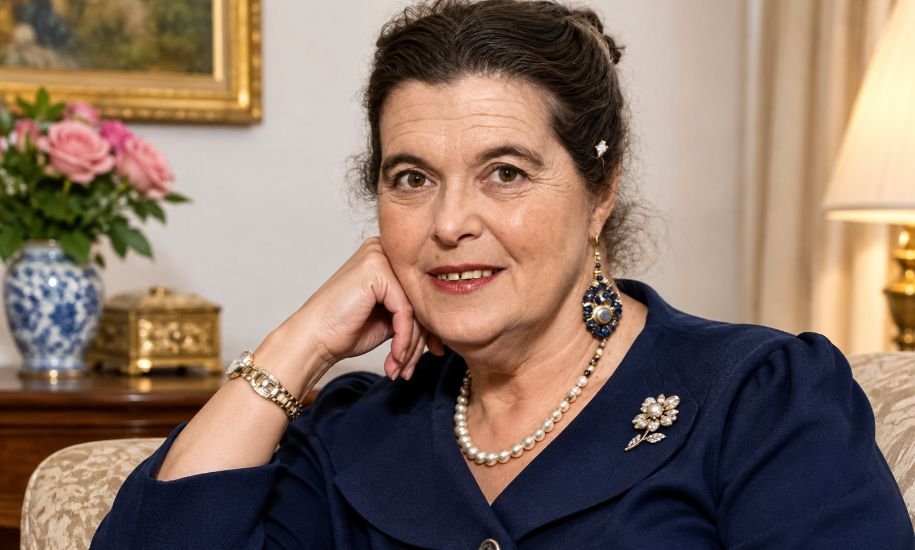
Lynne Reid Banks was a British novelist whose writing career spanned more than six decades, taking her from television journalism and adult fiction to internationally recognised children’s literature. She became particularly well known for The L-Shaped Room, her 1960 debut novel about an unmarried pregnant woman, and The Indian in the Cupboard, a children’s fantasy that introduced generations of readers to a boy named Omri and his magical cupboard.
Her life was equally varied. Before becoming a successful author, she trained as an actress, worked in repertory theatre and became one of the first two female television news reporters in Britain. She later lived in Israel, married sculptor Chaim Stephenson and raised three sons on a kibbutz. Banks died in Surrey on 4 April 2024, aged 94, leaving behind a substantial collection of books for adults and younger readers.
Quick Answer: Who Was Lynne Reid Banks?
Lynne Reid Banks (31 July 1929 – 4 April 2024) was a British novelist, children’s author and former television journalist. She was best known for writing The Indian in the Cupboard (1980) and The L-Shaped Room (1960). Before becoming a successful author, she worked as one of the first two female television news reporters in Britain at ITN. She was married to Israeli sculptor Chaim Stephenson from 1965 until his death in 2016, and they had three sons: Adiel, Gillon and Omri. Banks died in Surrey aged 94, leaving a lasting contribution to British children’s literature.
Quick Biography of Lynne Reid Banks
| Detail | Information |
|---|---|
| Full professional name | Lynne Reid Banks |
| Date of birth | 31 July 1929 |
| Place of birth | Barnes, West London, England |
| Date of death | 4 April 2024 |
| Age at death | 94 |
| Nationality | British; later became an Israeli citizen |
| Profession | Novelist, children’s author, journalist and former actress |
| Education | Royal Academy of Dramatic Art (RADA) |
| Parents | James Reid Banks and Muriel Marsh, known professionally as Muriel Alexander |
| Husband | Chaim Stephenson |
| Marriage | 1965 |
| Children | Three sons: Adiel, Gillon and Omri |
| Known for | The L-Shaped Room and The Indian in the Cupboard |
| Last verified published book | The Red Red Dragon (2022) |
| Years active as a writer | 1960 onwards |
Who Was Lynne Reid Banks?
Lynne Reid Banks was an English-born author who established her reputation through novels exploring relationships, social expectations and family life. Although her children’s books eventually gave her international recognition, she initially found success writing for adults.
Her first novel, The L-Shaped Room, appeared in 1960 and became a bestseller. It was subsequently adapted into a successful British film starring Leslie Caron. Two decades later, she achieved another major breakthrough with The Indian in the Cupboard, a fantasy story that developed into a five-book series and was adapted for Hollywood.
Her professional background was not limited to writing. She had experience in acting, journalism, television reporting, playwriting and teaching. This range of interests contributed to a career that covered several different stages of British cultural and publishing history.
Early Life, Parents and Childhood
Lynne Reid Banks was born on 31 July 1929 in Barnes, West London. She was the only child of James Reid Banks, a Scottish doctor, and Muriel Marsh, an Irish actress who performed under the professional name Muriel Alexander.
Her childhood was significantly affected by the Second World War. In 1940, when she was around ten years old, she travelled to Canada with her mother and cousin Christopher as part of the wartime evacuation. They settled in Saskatoon, Saskatchewan, where she spent approximately five years.
Banks later recalled enjoying her time in Canada. The experience also exposed her to the landscapes, stories and popular imagination of the North American West, elements that would become relevant to some of her later children’s writing.
She returned to England in 1945. Her father subsequently died, and her mother encouraged her to acquire practical employment skills before pursuing an acting career. Banks learned shorthand and typing before training at drama school.
Education and Acting Career
Banks attended a Catholic boarding school during her early education and later studied at the Royal Academy of Dramatic Art, commonly known as RADA.
She initially wanted to follow her mother into acting. After completing her training, she spent several years working in weekly repertory theatre. However, she eventually recognised that a successful acting career was unlikely to provide the opportunities she wanted.
She described herself as an unsuccessful actress before discovering her real talent for writing. Her theatrical experience was not wasted, however. The discipline of understanding characters, dialogue and dramatic situations became valuable when she started developing fictional people and their stories.
Before establishing herself as an author, she also worked as a secretary and freelance journalist.
Television Journalism and Her Career at ITN
One of the most distinctive parts of Banks’s professional history was her work in early British television news.
In 1955, she joined Independent Television News (ITN), becoming one of the first two women working as television news reporters in Britain. At that time, women were considerably under-represented in television journalism, particularly in reporting roles.
Her work included interviews with well-known personalities and public figures. People she recalled interviewing included Charlie Chaplin, Audrey Hepburn, Rita Hayworth, Louis Armstrong, Maria Callas and Agatha Christie.
She also participated in the development of street interviews, now commonly known as vox pops, which brought ordinary people’s opinions into television news coverage.
Her time at ITN lasted approximately six years. She later wrote about the experience in a 2011 Guardian article, explaining how different and exciting television reporting in the 1950s had been.
The newsroom eventually became the place where her writing career took shape. During quieter periods at work, she began developing her first novel. What started as an alternative creative activity became the foundation of her professional life as a novelist.
The L-Shaped Room and Her Breakthrough as a Novelist
Published in 1960, The L-Shaped Room was Banks’s debut novel and remains one of her most significant works.
The story follows Jane Graham, an unmarried middle-class woman who becomes pregnant and is forced to leave her family home after her father discovers her circumstances. She moves into a run-down London boarding house, where she encounters people from different social backgrounds and begins building an independent life.
The novel addressed subjects that were controversial in Britain at the time, including unmarried motherhood, social prejudice, female independence and the expectations placed on women.
Its direct treatment of these issues helped it connect with readers. The book became a major commercial success, reportedly selling millions of copies and remaining in print across successive editions.
Banks was sometimes asked whether the novel reflected her own experience. She rejected that assumption, explaining that the story was an imaginative work rather than an account of her personal life.
Its success established her as a novelist and encouraged her to continue writing adult fiction.
The story also developed into a trilogy:
- The L-Shaped Room (1960)
- The Backward Shadow (1970)
- Two Is Lonely (1974)
The later books continued the story of Jane Graham and extended the fictional world introduced in the first novel.
Life in Israel and Marriage to Chaim Stephenson
Banks’s personal life took a significant turn during the early 1960s when she became interested in Israel.
She had visited the country and met Chaim Stephenson, an Israeli sculptor who had been born in Liverpool. Their relationship developed, and she eventually followed him to Israel, where they lived on a kibbutz in the Galilee region.
The couple married in Cyprus in 1965. They subsequently had three sons together: Adiel, Gillon and Omri.
During her years in Israel, Banks experienced a lifestyle very different from her earlier existence in London. She worked on the kibbutz, including agricultural activities, and taught English as a foreign language. She later described teaching as an occupation she particularly enjoyed.
Her experiences in Israel influenced several publications, including fiction and non-fiction dealing with Israeli society, family relationships and the country’s history.
In 1971, Banks and her husband returned to Britain with their three sons. Chaim continued developing his career as a sculptor, producing work that explored subjects including family, Jewish history and human experiences.
He died in 2016. Their marriage had lasted more than five decades.
The Indian in the Cupboard: Her Most Famous Children’s Book
Although Banks had already established herself as a novelist, The Indian in the Cupboard became her most internationally recognised work.
Published in 1980, the story follows Omri, a young boy who discovers that a small cupboard can magically bring plastic toy figures to life.
The central idea developed from Banks’s imagination and her experiences with her youngest son, Omri Stephenson. She began the story as a bedtime tale for him and eventually developed it into a full children’s novel.
The series explores imagination, friendship, responsibility and the consequences of bringing historical characters into the modern world.
The five books are:
| Order | Book | First publication |
|---|---|---|
| 1 | The Indian in the Cupboard | 1980 |
| 2 | The Return of the Indian | 1986 |
| 3 | The Secret of the Indian | 1989 |
| 4 | The Mystery of the Cupboard | 1993 |
| 5 | The Key to the Indian | 1998 |
The series attracted a large international readership. According to her literary agency, the first book alone sold more than ten million copies. The wider series helped establish Banks as a leading name in children’s fantasy fiction.
Other Books by Lynne Reid Banks
Banks wrote approximately 45 books for children and adults. Her work included historical fiction, adventure stories, adult novels, literary biography and non-fiction.
Some of her notable publications include:
| Book | Year |
|---|---|
| The L-Shaped Room | 1960 |
| An End to Running | 1962 |
| Children at the Gate | 1968 |
| The Backward Shadow | 1970 |
| One More River | 1973 |
| Two Is Lonely | 1974 |
| Dark Quartet: The Story of the Brontës | 1976 |
| Path to the Silent Country | 1977 |
| I, Houdini | 1978 |
| Letters to My Israeli Sons | 1979 |
| The Indian in the Cupboard | 1980 |
| The Fairy Rebel | 1985 |
| The Return of the Indian | 1986 |
| The Secret of the Indian | 1989 |
| The Mystery of the Cupboard | 1993 |
| Harry the Poisonous Centipede | 1996 |
| Angela and Diabola | 1997 |
| The Key to the Indian | 1998 |
| Tiger, Tiger | 2004 |
| Uprooted: A Canadian War Story | 2014 |
| The Red Red Dragon | 2022 |
Her Brontë-related books, particularly Dark Quartet and Path to the Silent Country, demonstrated her interest in historical literary figures. Meanwhile, Harry the Poisonous Centipede introduced another group of younger readers to her imaginative storytelling.
Her 2014 book Uprooted also returned to the subject of wartime evacuation and her childhood experiences in Canada.
Lynne Reid Banks Movies and Film Adaptations
Two of Banks’s best-known novels were adapted for cinema.
The L-Shaped Room (1962)
The first major film adaptation was The L-Shaped Room, directed by Bryan Forbes and released in 1962.
The film starred Leslie Caron as Jane, with Tom Bell also among the principal cast. It received considerable attention, and Caron earned an Academy Award nomination for Best Actress, as well as a BAFTA and a Golden Globe for her performance.
Banks was initially unhappy with the adaptation because she believed important elements and characters from her novel had been changed. She later became more accepting of the film.
The Indian in the Cupboard (1995)
The second major adaptation was The Indian in the Cupboard, released in 1995 and directed by Frank Oz.
The fantasy film brought the magical cupboard story to a wider screen audience. It starred Hal Scardino as Omri and Litefoot as Little Bear, alongside a supporting cast that included Lindsay Crouse, Richard Jenkins and Steve Coogan.
The adaptation introduced the story to viewers who may not previously have encountered the original book.
Awards and Professional Recognition
Banks received recognition for her contribution to children’s literature.
One of her most important honours was the J. M. Barrie Award, which she received in October 2013 for her outstanding contribution to children’s arts.
Her children’s writing also received other recognition:
- Harry the Poisonous Centipede received the Silver Award in the 1996 Nestlé Smarties Book Prize.
- Broken Bridge was nominated for the Carnegie Medal.
- Her wider body of work attracted international publishing and literary recognition.
These distinctions reflected the range of her writing and her lasting contribution to books for younger readers.
Criticism and the Literary Legacy of Her Books
Banks’s books remain widely read, but some have also attracted criticism, particularly The Indian in the Cupboard.
Critics have questioned the way Native American characters are represented in the story, including the character of Little Bear. In 1986, Native American writer Louise Erdrich published a critical assessment of the book’s portrayal of Indigenous people.
Banks did not simply ignore the debate. She acknowledged that some aspects of her writing might have been different had she approached the subject in a later period. She also discussed factual revisions and objections raised about the original portrayal.
In another interview, she reflected on the treatment of a Black character in The L-Shaped Room, expressing embarrassment about aspects of the character’s language and representation that she would not have written in the same way later in her life.
These discussions form part of a balanced assessment of her literary legacy. Her books achieved considerable popularity, but their cultural assumptions can also be examined critically through modern perspectives.
Lynne Reid Banks’s Final Years and Death
During her later years, Banks lived near Shepperton in Surrey with her middle son, Gillon, and his wife, Olga.
She continued writing and remained interested in publishing new work. Her official website recorded her collaboration with Gillon on The Red Red Dragon, particularly as declining eyesight made it more difficult for her to revise manuscripts independently.
Published by Walker Books on 3 November 2022, The Red Red Dragon was her latest verified published title.
Banks died on 4 April 2024 in Surrey, aged 94. Her literary agent announced that she had died peacefully with her family around her after cancer. Her death was reported by major British and international news organisations.
She was survived by her three sons, Adiel, Gillon and Omri, as well as her grandchildren.
Conclusion
Lynne Reid Banks built a distinctive literary career through her ability to move between adult fiction, historical writing and children’s fantasy. From her early experiences in British television journalism to the success of The L-Shaped Room and The Indian in the Cupboard, her work reached readers across different generations.
Her life also reflected experiences beyond the publishing world, including acting, teaching and raising a family in Israel. Although some of her books continue to prompt discussion about cultural representation, her influence on children’s literature and British fiction remains an important part of her legacy.
Frequently Asked Questions
Who was Lynne Reid Banks?
Lynne Reid Banks was a British novelist, children’s author, former actress and television journalist. She was best known for The L-Shaped Room and The Indian in the Cupboard.
When was Lynne Reid Banks born?
She was born on 31 July 1929 in Barnes, West London, England.
How old was Lynne Reid Banks when she died?
She was 94 when she died on 4 April 2024 in Surrey.
Who was Lynne Reid Banks’s husband?
Her husband was Chaim Stephenson, an Israeli sculptor originally from Liverpool. They married in 1965 and remained together until his death in 2016.
Did Lynne Reid Banks have children?
Yes. She had three sons with Chaim Stephenson: Adiel, Gillon and Omri.
What was Lynne Reid Banks’s most famous book?
Her most internationally recognised children’s book was The Indian in the Cupboard, first published in 1980. Her debut adult novel, The L-Shaped Room, was also a major bestseller.
Were Lynne Reid Banks’s books made into films?
Yes. The L-Shaped Room was adapted into a British film in 1962, while The Indian in the Cupboard became a Hollywood film in 1995.
What was Lynne Reid Banks’s net worth?
Her exact net worth has not been reliably established in public records. Although her books achieved significant commercial success, there is no sufficiently documented personal wealth figure that can responsibly be presented as fact.




One Comment